%20(2).png)
Recognition: L'Oréal Brandstorm 2023 Global Top 10 Finalist (Selected from 92,000+ teams)
Timeline: 10 Months
Team: 3 Members
Research: Pilot testing
Design: UX & Hardware
Eng: Arduino Prototyping
Miro
Figma
Arduino (C++)
How Do Older Adults Manage Skincare Today?
For many older adults, skincare is not just hard to use. It is hard to understand. Weak hands, shaky movements, and too many product choices turn a simple routine into a stressful task. Over time, many people give up not because they do not care, but because the experience is overwhelming.
Goal
The goal is to restore independence and ease by creating a skincare companion that helps elderly do what they intend to do.
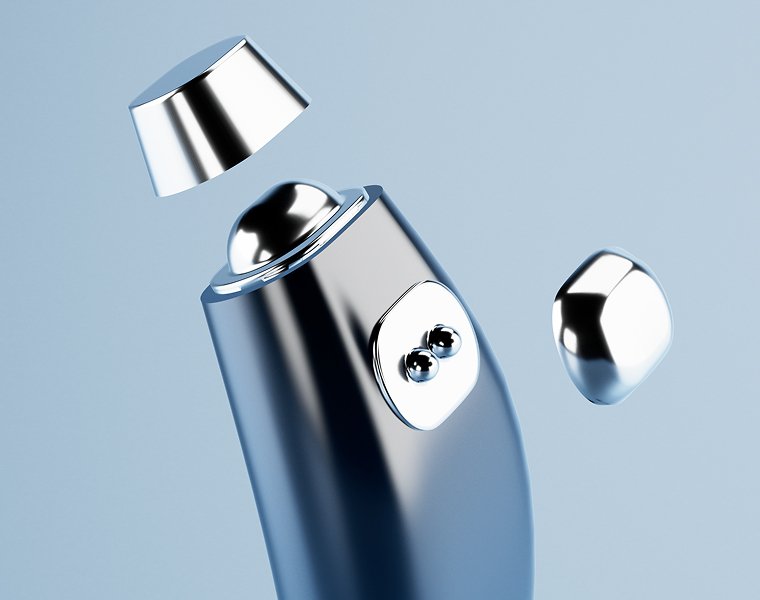
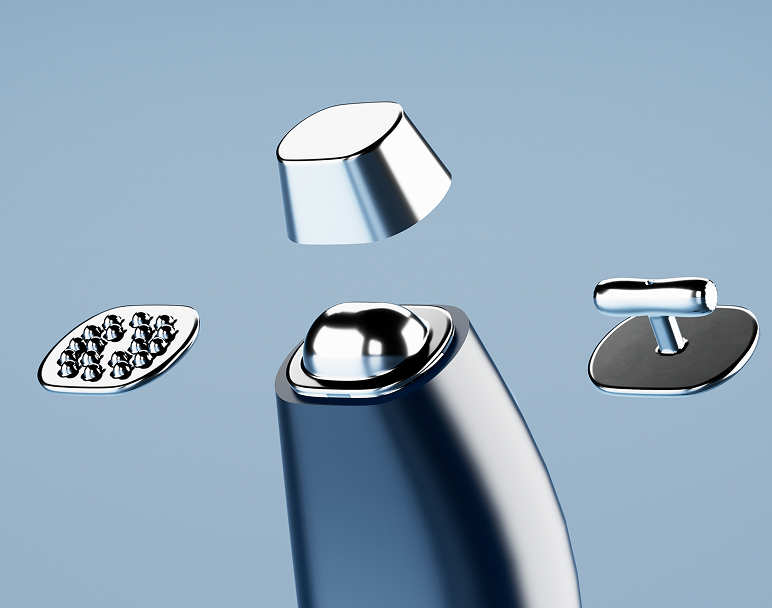
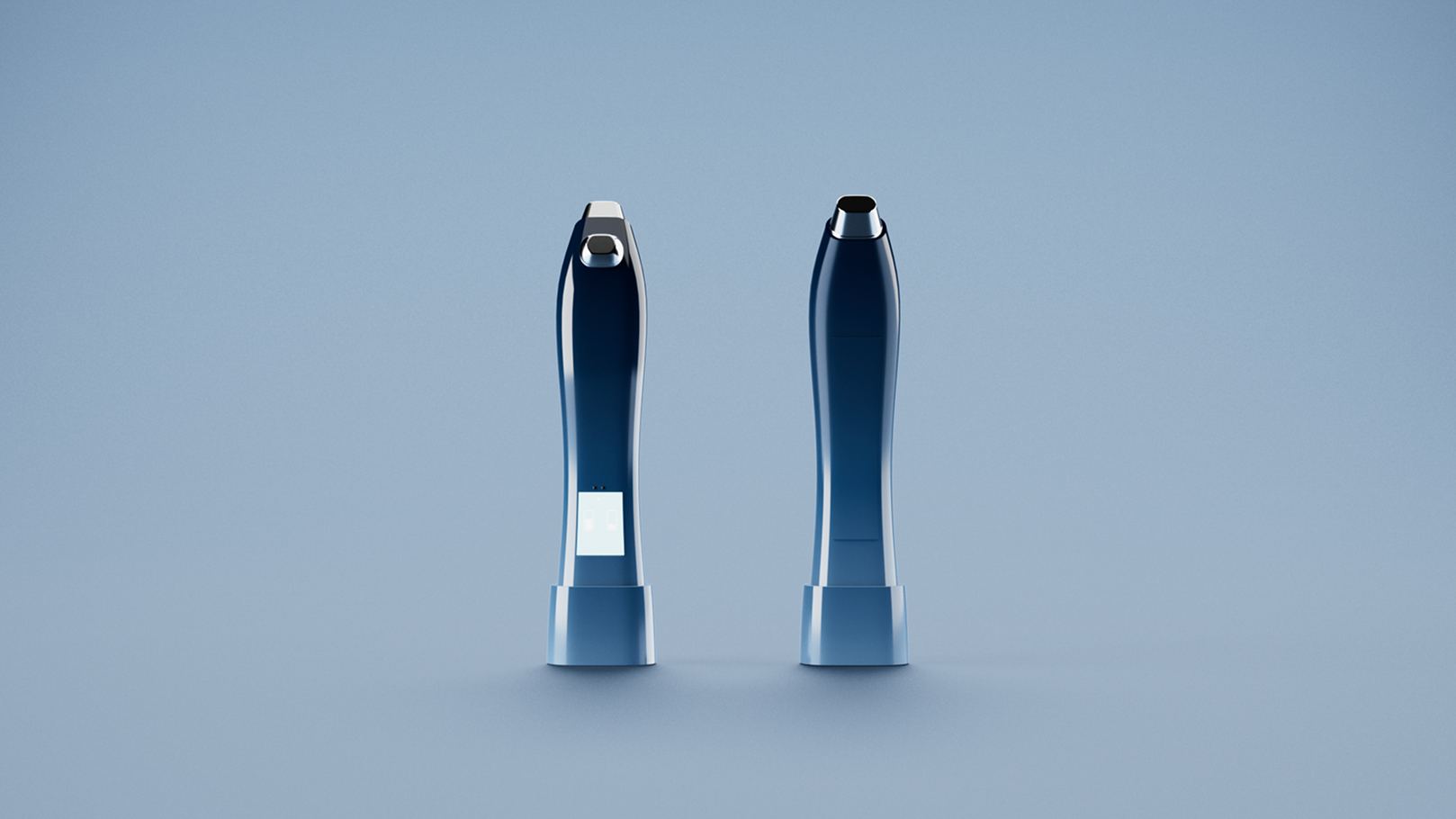
Panache is a system-assisted skincare companion designed for older adults.
It reduces decisions, physical effort, and mental load to make daily care feels simple again.
The system automatically selects the right lotion based on daily skin conditions, removing the need to compare or guess.
A lightweight body and wide grip support aging hands, eliminating twisting or squeezing.
Gentle voice prompts and clear visual cues guide users step by step, even when attention or memory fluctuates.
Together, these design choices turn skincare from a demanding task into a calm, manageable routine.
To understand why skincare routine breaks down, we spent four weeks observing how older adults care for their skin in daily life.
We conducted in-home observations and research in senior care facilities, focusing on what people struggled with during use rather than what they said afterward. Most issues were not dramatic. They showed up as small, repeated moments of hesitation, fatigue, and workarounds.
In-depth Interviews
5 Seniors (Elderly)
1 Caregivers
1 Dermatologists/Nurses
2 Care Facilities Visited
10+ Key Papers Analyzed
24+ Hours of Shadowing
Why Skin Health Matters
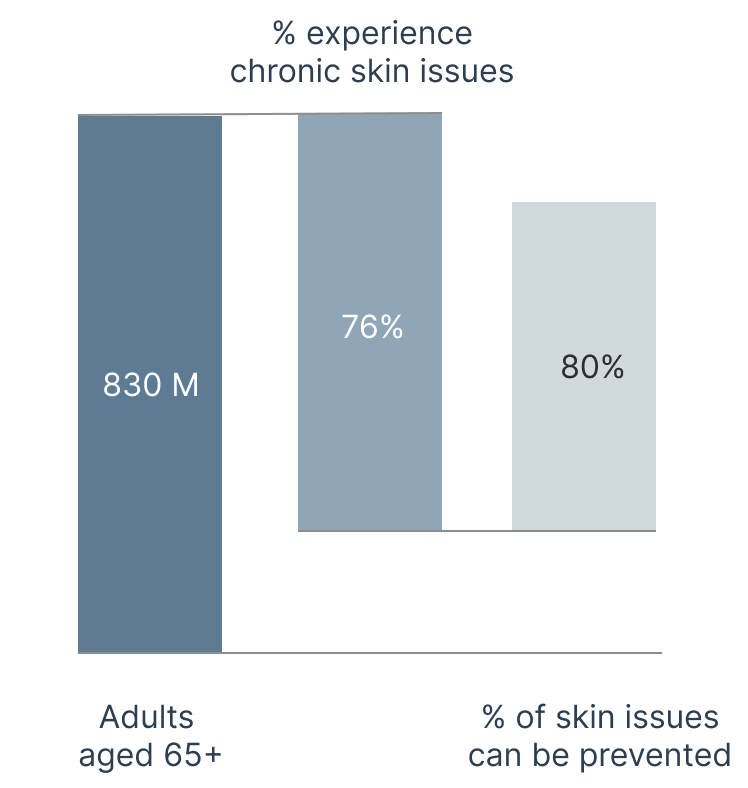
As people age, skin issues become more common and harder to manage. By 2060, the number of adults over 65 is expected to double. Many older adults experience chronic skin problems, and a large portion of these issues could be reduced with consistent care. The gap is not knowledge. Most skincare products are simply not designed for aging bodies.
Our research showed that skincare breaks down at three key moments: choosing a product, using it, and maintaining the routine. These insights directly shaped the system design.

Changing skin conditions and similar-looking bottles make selection confusing. This leads to frustration and ineffective care.
"There are too many bottles on the shelf. I can never remember which one is for my dry patches, so I just guess."
— Ms. Chen (72 years old)
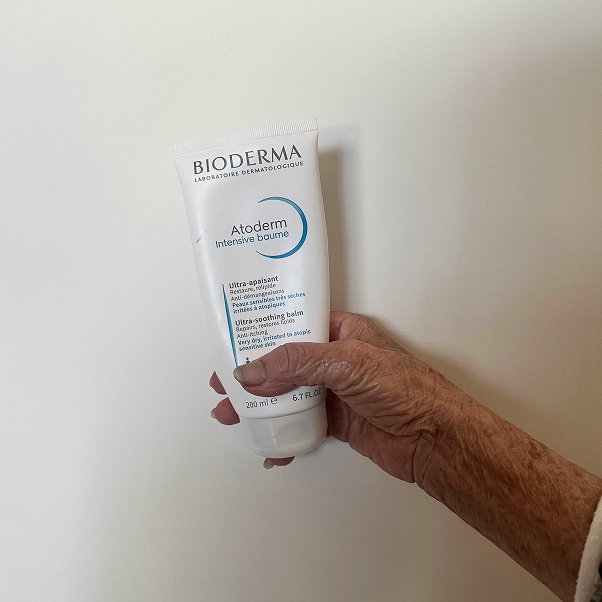
Reduced grip strength makes twisting caps or pumping lotion difficult. What should be a simple action can take too much effort.
"I dropped the heavy glass bottle twice last week because it was too heavy."
— Ms. Lin (67 years old)

Skincare results take time. When users do not see or feel immediate change, motivation fades. Daily changes in health or mood easily disrupt the habit.
"I don't see any difference in the mirror immediately."
— Ms. Liu (78 years old)
01: Cognitive Overload → Cognitive Offloading
What we saw: Older adults often selected the wrong product for their daily skin condition.
What it meant: Making choices was the hardest part of the routine.
How we responded: Scan skin conditions daily and automatically select the right lotion, removing the need to decide.
02: Physical Constraints → Inclusive Interaction
What we saw: Users struggled with squeezing and twisting.
What it meant: Skincare packaging demands more strength and control than aging hands can provide.
How we responded: Use zero force dispensing and a wide grip that supports stable, comfortable use.
03: Emotional Disconnect → Adaptive Feedback Loop
What we saw: Users could not see immediate results, which led to low motivation.
What it meant: Without feedback, routines quietly fall apart.
How we responded: Offer gentle voice guidance and small moments of feedback to reassure users that they are on track.
Research showed that common bottle motions cause pain and instability for users with reduced dexterity. Many everyday skincare containers rely on twisting, squeezing, or precise finger control, which makes them difficult and uncomfortable for older adults to use.
My goal during ideation was simple. Find a form that requires less effort, offers better control, and feels stable in the hand.
Form Follows Biomechanics
I started by exploring how different shapes could support the natural resting posture of an aging hand. Instead of defaulting to standard cylindrical forms, I sketched over fifteen variations that redistributed force across the palm rather than relying on finger pinch strength.
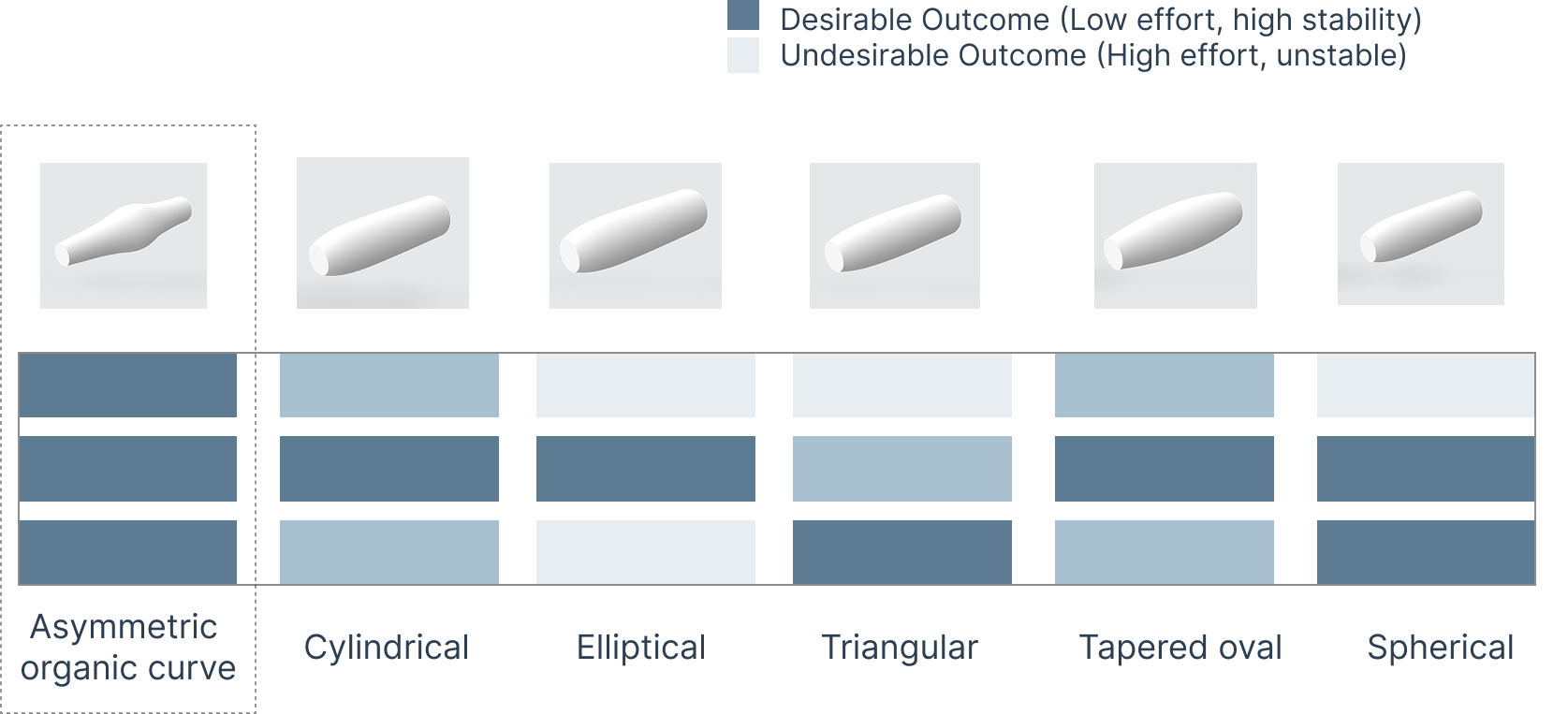
These explorations included spherical and ellipsoid forms to increase contact area, tapered bodies to improve grip stability, triangular profiles to reduce rotation, and asymmetric organic curves aligned with thumb and index finger movement.
The goal was to identify shapes that felt supportive rather than demanding during use.
After reviewing which forms required less grip strength, I narrowed the exploration to six familiar shapes inspired by everyday objects.
-1%201.jpg)
Testing Tactile Affordance
I translated the sketches into 3D printed prototypes, each with a distinct grip geometry.
The prototypes included cylindrical, elliptical, spherical, tapered oval, triangular, and asymmetric organic forms.
Physical models allowed me to test grip stability, force distribution, and pressure points during real use. Unlike sketches, they made it possible to observe how older adults actually held, adjusted, and stabilized the device in their hands.


Testing revealed clear differences between forms.
Cylindrical and triangular shapes felt unstable and uncomfortable due to uneven pressure. The asymmetric organic curve offered the best balance of comfort, stability, and ease of use while requiring minimal effort. Rather than defining a literal final shape, this insight informed the ergonomic principles behind Panache’s hardware design.
Once the physical form was resolved, the next challenge was interaction.
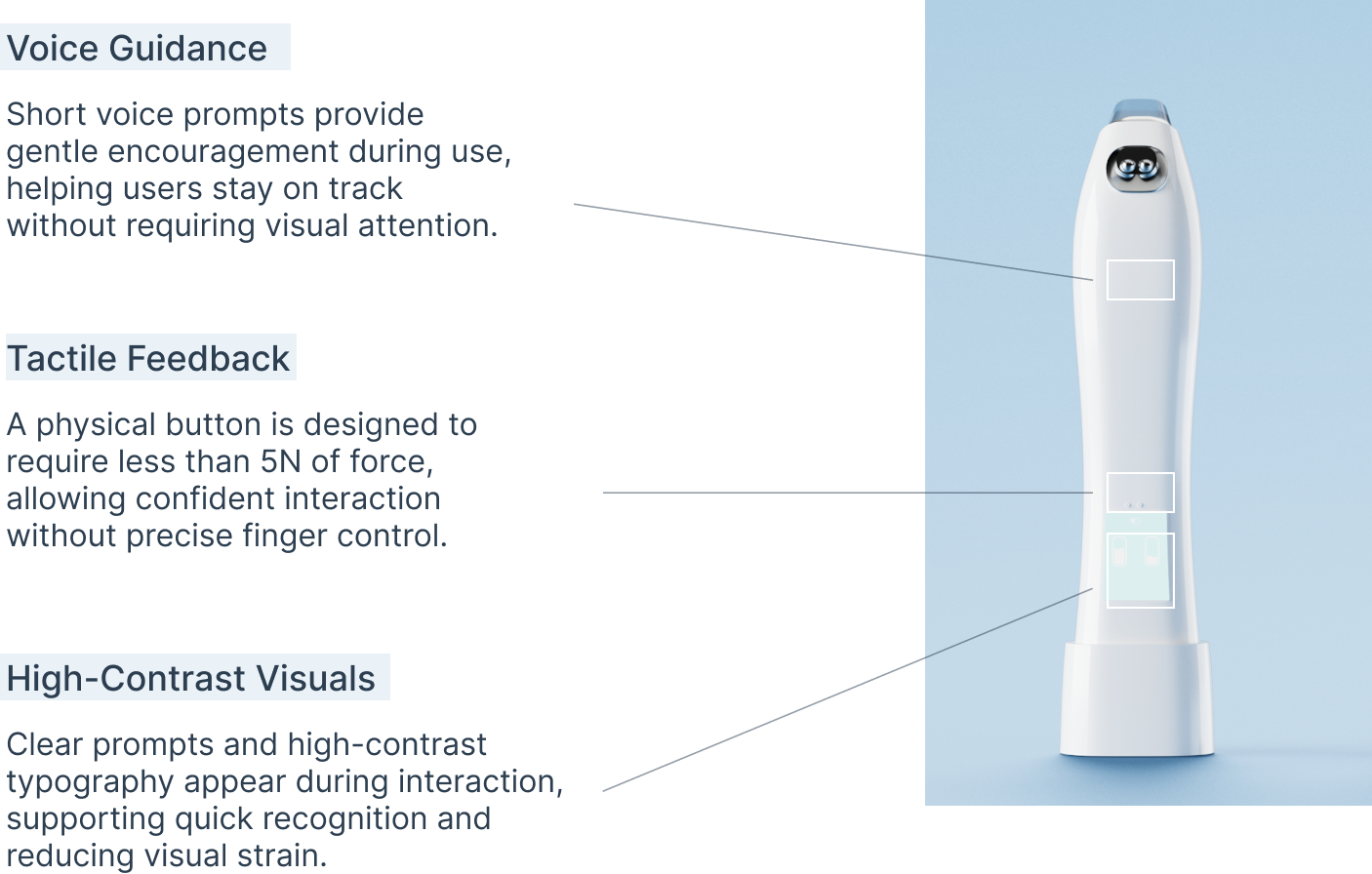
Even with a comfortable grip, small screens and complex navigation can overwhelm older adults. To support users with low digital literacy or declining vision, I designed a multimodal interaction system that combines visual, tactile, and voice cues to reduce cognitive load during use.
With the interaction defined, we stepped back to design the system that supports it over time.
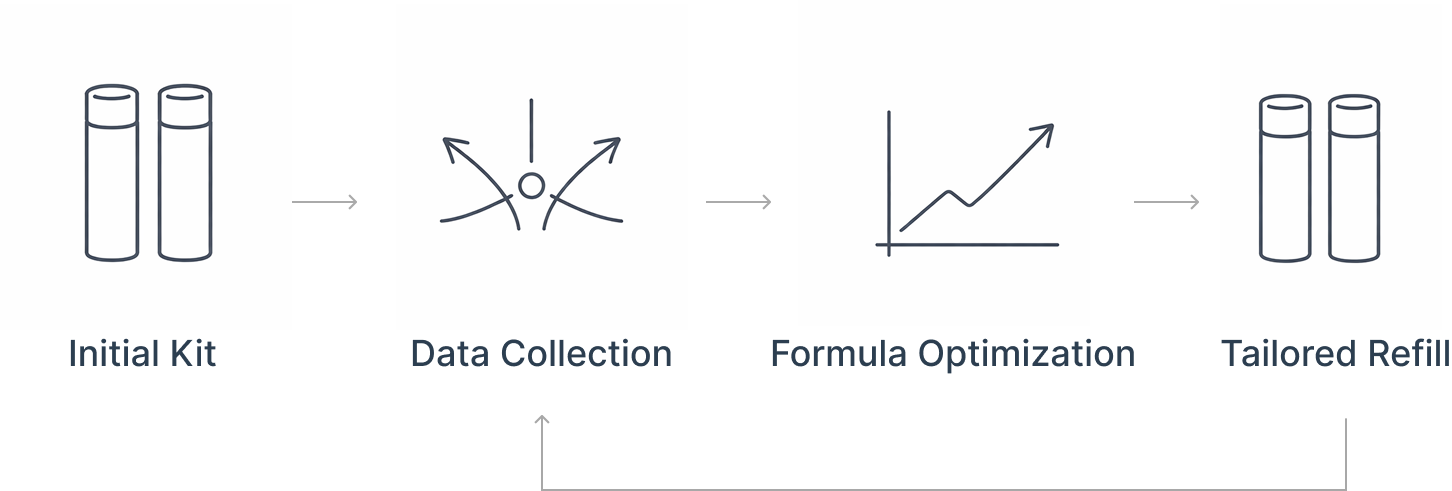
Panache is not a single interaction, but a routine. I mapped how sensing, recommendation, dispensing, and guidance come together in daily use, then extended the system into a longer cycle that adapts refills to changing skin conditions and seasons.
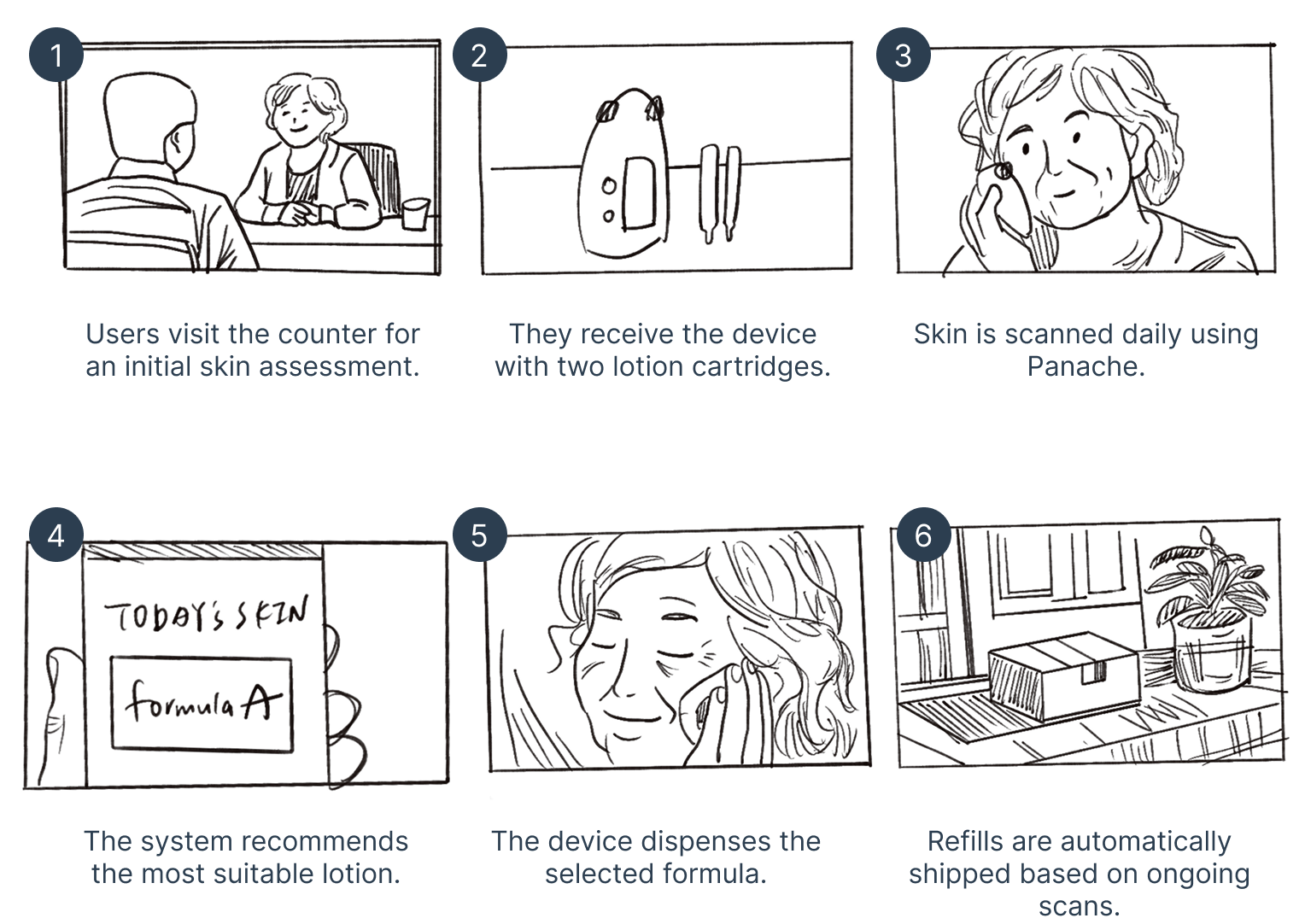
As users continue using Panache, the system learns from daily scans and adjusts product selection over time. This turns skincare into an adaptive service that improves with use while staying simple for the user.
By leveraging L’Oréal’s product portfolio, recommendations become more accurate and the subscription model remains valuable.
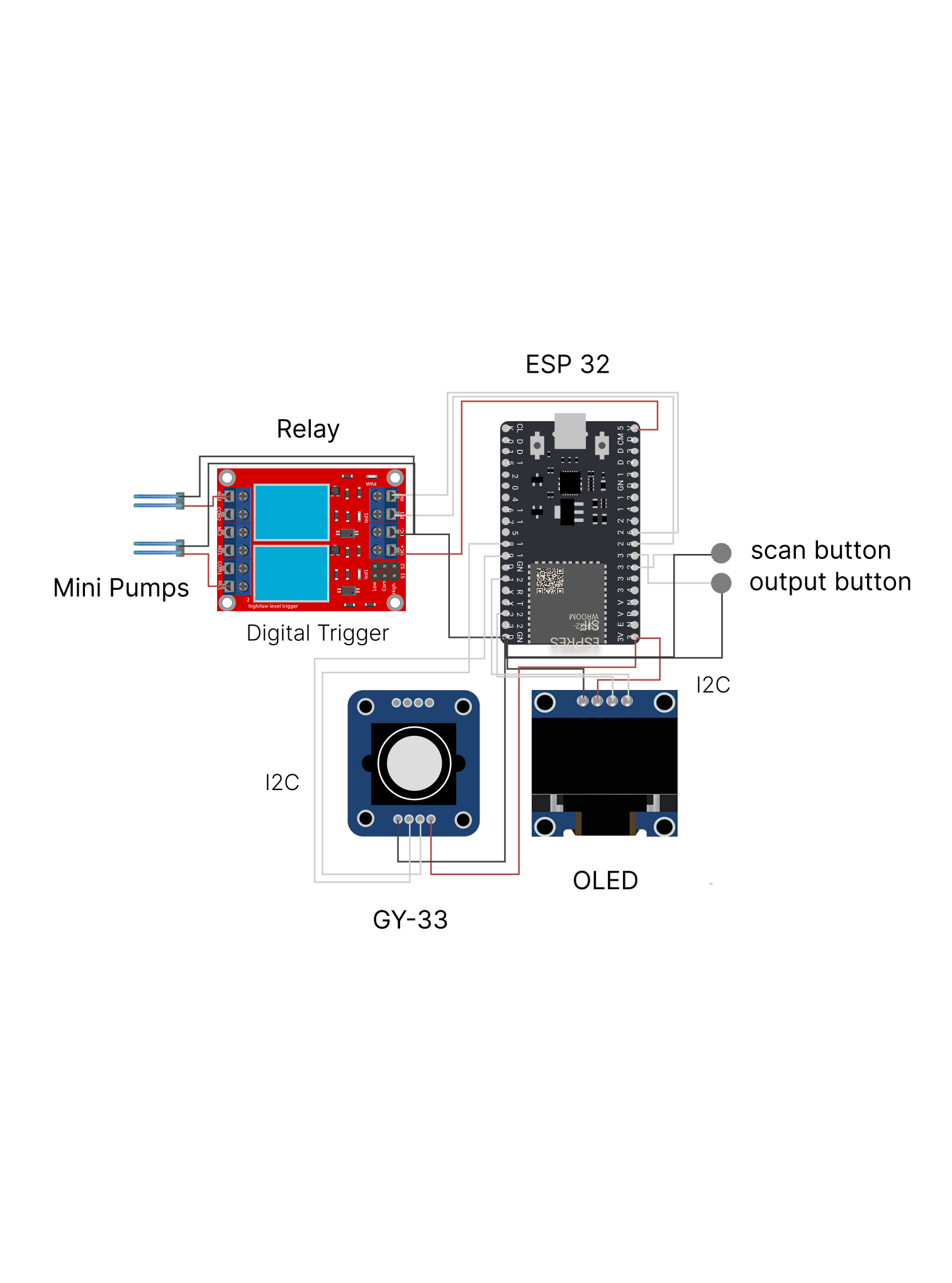
A simplified modular diagram showing RGB sensing, decision logic, dispensing, and feedback systems.

The works-like prototype focused on validating system logic and interaction timing. Audio output was defined at the interaction design level and planned for future integration.
Why a relay and pump
A relay-driven pump was used to ensure consistent dispensing of thicker lotions, fully removing the need for squeezing and reducing physical strain for users with limited hand strength.
Why ESP32 and sensors
The ESP32 enables fast processing from scan to dispense, minimizing waiting time and reducing uncertainty or anxiety during use.
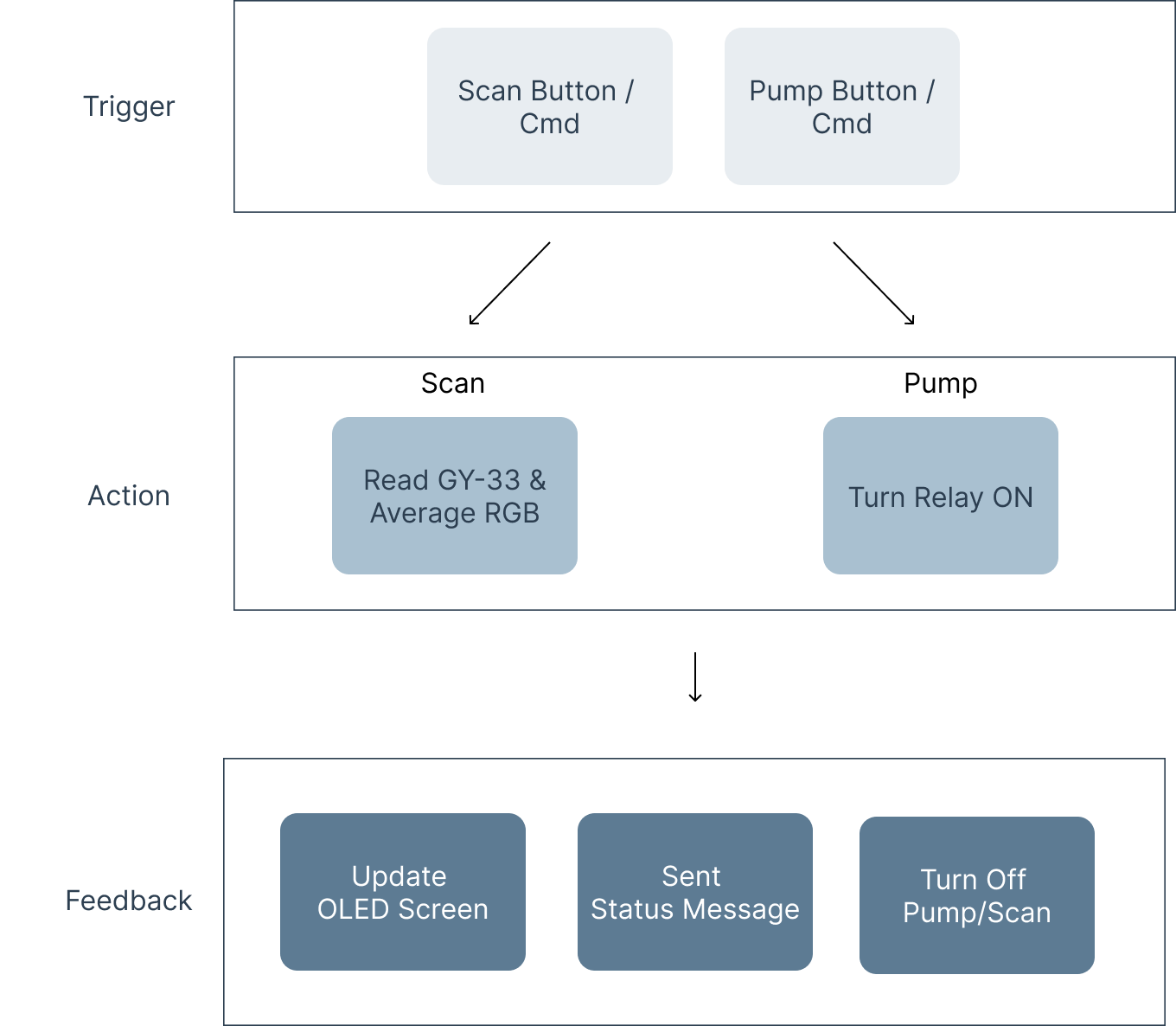
The prototype executes the full sensing to feedback loop.
User input triggers either a scan or dispense action. Skin data is captured and processed, decisions are made in real time, and feedback is delivered through visual and system responses. Once each action is complete, the system resets, ready for the next interaction.
This confirmed that Panache could operate as a calm, self-contained system without requiring complex user input.
This evaluation is an initial formative assessment intended to inform future iterations of Panache.
To explore how the system might perform in real use, I conducted an early-stage evaluation with six older adults (65+), focusing on interaction clarity, physical effort, and trust in automated behavior. Due to the involvement of physical motion and dispensing mechanisms, testing combined guided interaction demonstrations with low-fidelity tactile models.
Overall, participants described the experience as calm and easy to follow. The automated scan-to-dispense flow reduced decision-making effort and supported confident use. The following insights informed design refinements and future improvements.
→ Reinforce synchronized voice and visual cues to indicate system status and timing.
→ Provide step-by-step spatial instructions through the app and voice prompts (e.g., applying downward from the cheekbones).
→ Introduce a validation threshold in the system logic to detect outlier sensor values and prompt re-scanning when needed.
→ Offer a flexible refill option within the seasonal cycle, allowing single-bottle shipments based on actual usage patterns.
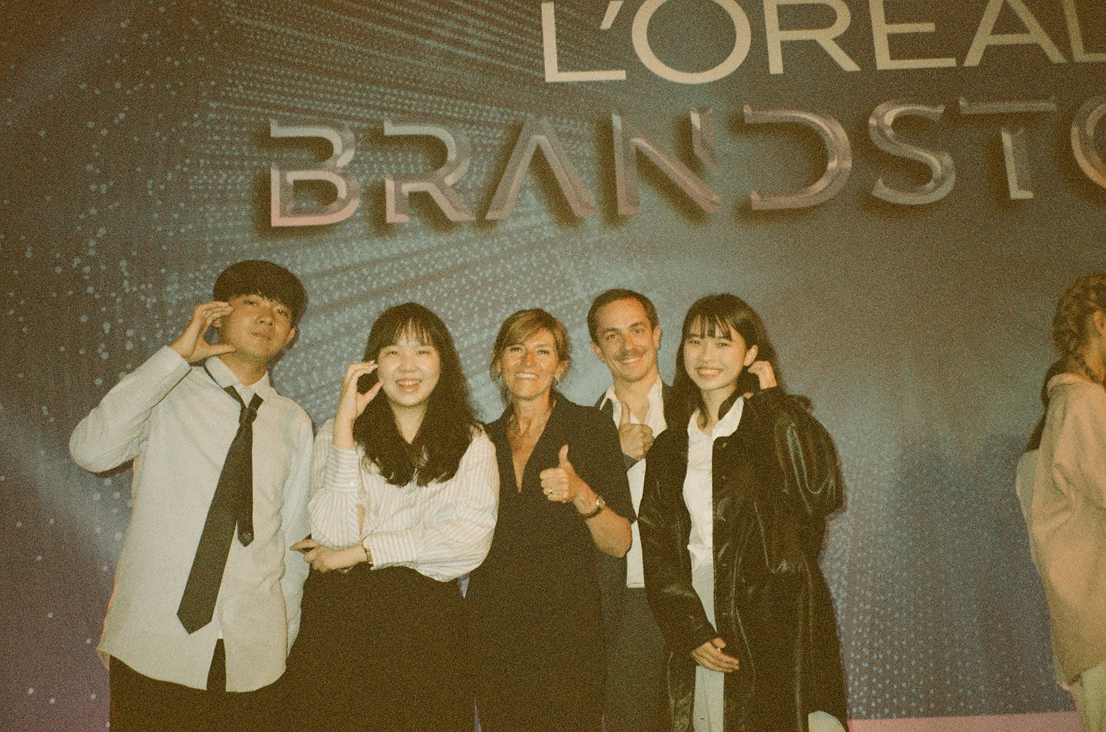
This project marked my first experience designing an end-to-end product, and it became the moment I realized my passion for this field.
While the competition itself concluded at the rendering stage, my interest in the problem did not. After the competition, I independently continued the work and built a functional prototype to explore how the system could operate in real use.
Through this process, I learned that truly user-centered design goes beyond defining features. It requires careful observation, empathy, and a deep understanding of what a specific group actually needs in their daily lives.
I am grateful to my teammates for bringing this project to life and for the opportunity to present our work on the Paris finals stage. Looking ahead, I hope to continue developing this system and eventually bring it into the real world.